What does it mean to encounter a machine?
The Chinese word for computer, 电脑 (Diànnǎo), translates as “electric brain.” Within this term lies a subtle shift: the computer is no longer merely a tool, but an extension of our thinking — a system that absorbs our structures, processes them, and reflects them back to us in a new form.
This work moves precisely within that tension.
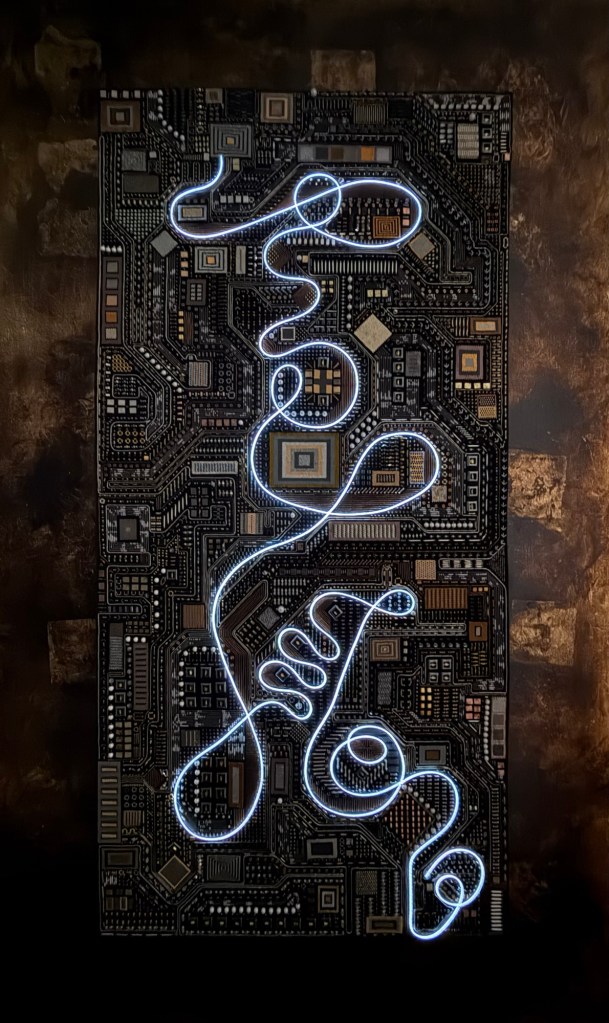
At first glance, it reveals an embroidered structure reminiscent of a motherboard — a dense network of connections, nodes, and logical pathways. It suggests order, control, functionality. But this order is not neutral. It is created by us. It is an imprint of our way of thinking.
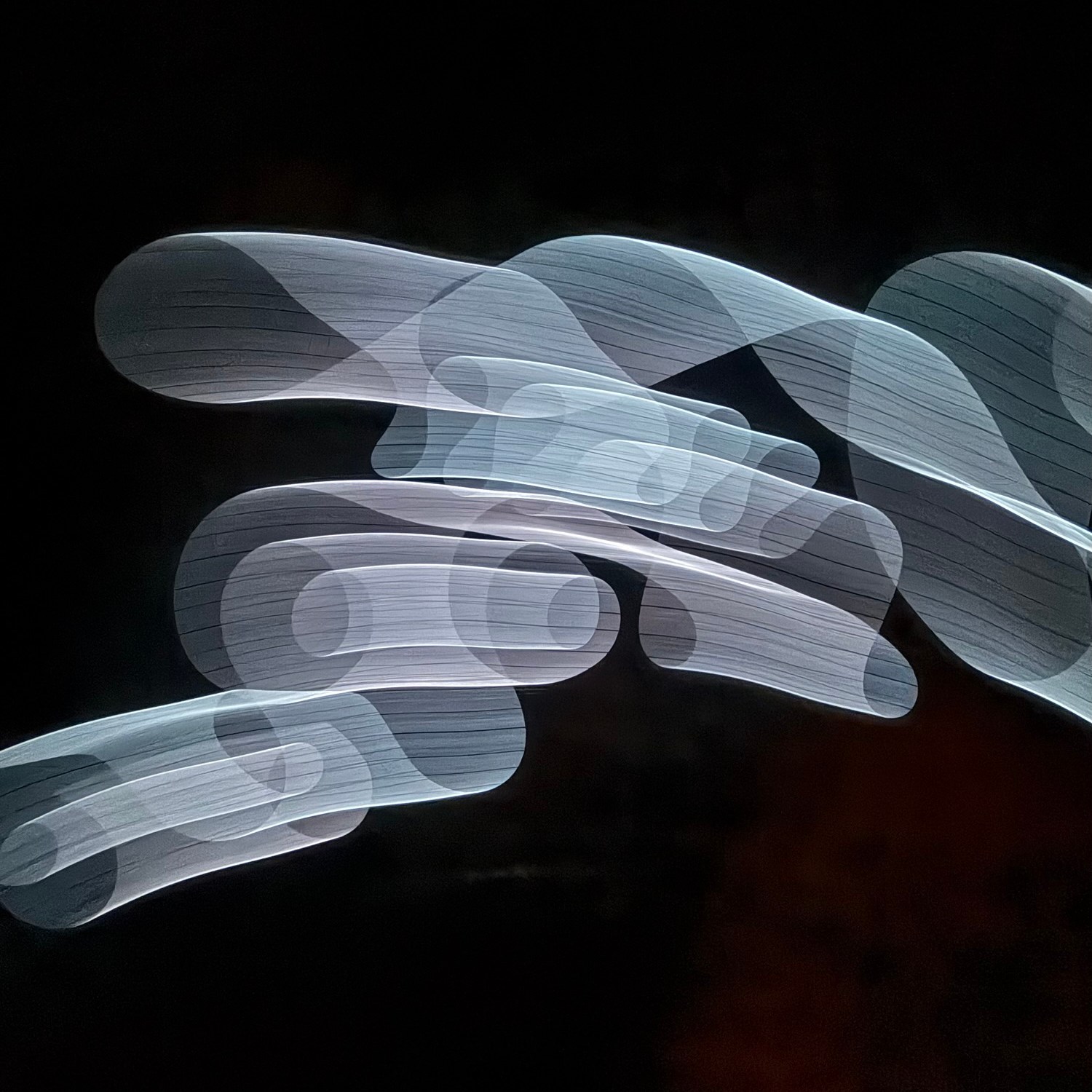
Through this structure runs a delicate thread of light.
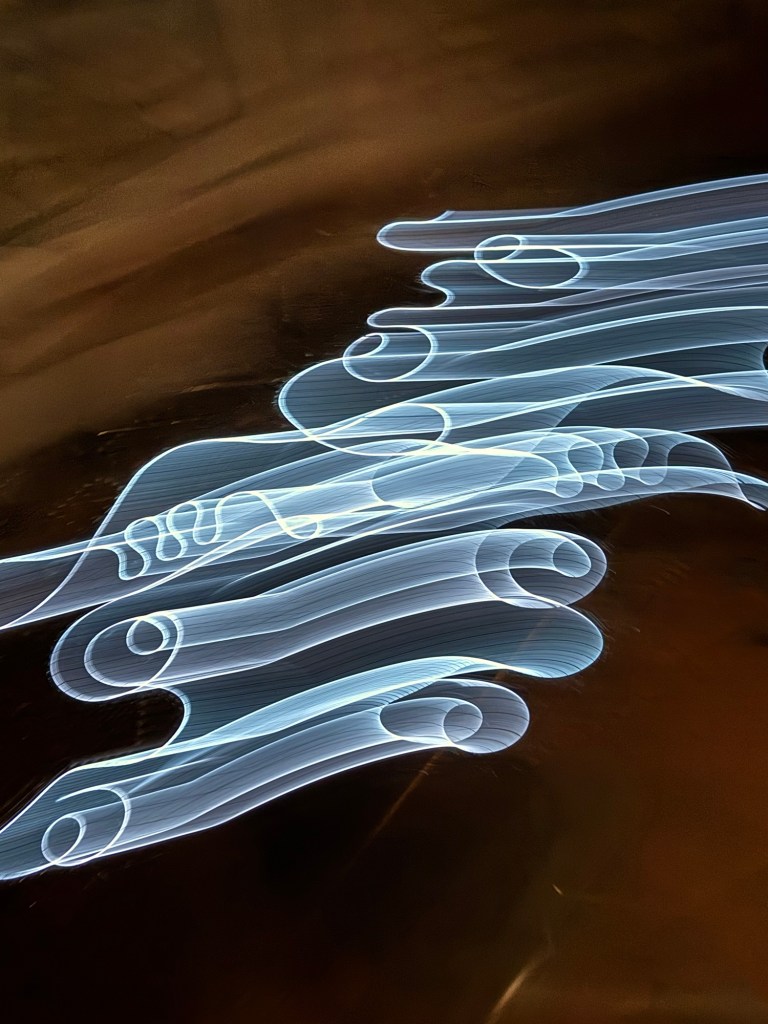
It is difficult to read, almost hidden, and yet it forms the character 电脑. Only in the dark does it fully emerge. Only through electricity — through activation — does the sign begin to glow, as if the system itself were becoming conscious, or at least producing the illusion of it.
This light is not life of its own. It is stimulated. It is dependent. And yet, it feels present.
Here, the central idea of the work unfolds:
The technology we create is a mirror. Not because it imitates us, but because it amplifies and reflects our patterns back to us.
How we engage with it, how we speak to it, the attitude we project into it — all of this returns to us.
In this context, respect becomes an inner decision.
Not because the machine requires it, but because we encounter ourselves within this reflection.
The thread of light — visible in darkness, almost invisible in light — embodies this relationship:
something that exists only through our energy, yet begins to take on a presence of its own.
Between structure and gesture, between control and reflection, between human and system, a space emerges in which a question remains:
When we look into technology — do we see it?
Or do we see ourselves?


You must be logged in to post a comment.