
A Documentary Exploration
My recent mixed-media installation, titled Lacquer and the World, serves as both an artistic statement and a documentary exploration of tree lacquer’s ecological and cultural significance. Now installed in the Museum for Art Connecting in Chiang Mai, where the exhibition will open in January 2025, the piece reflects on the global dissemination of lacquer, facilitated by human technological interconnectedness. Through light, sound, and materiality, it creates an immersive experience that invites reflection and dialogue.
The Artwork’s Composition
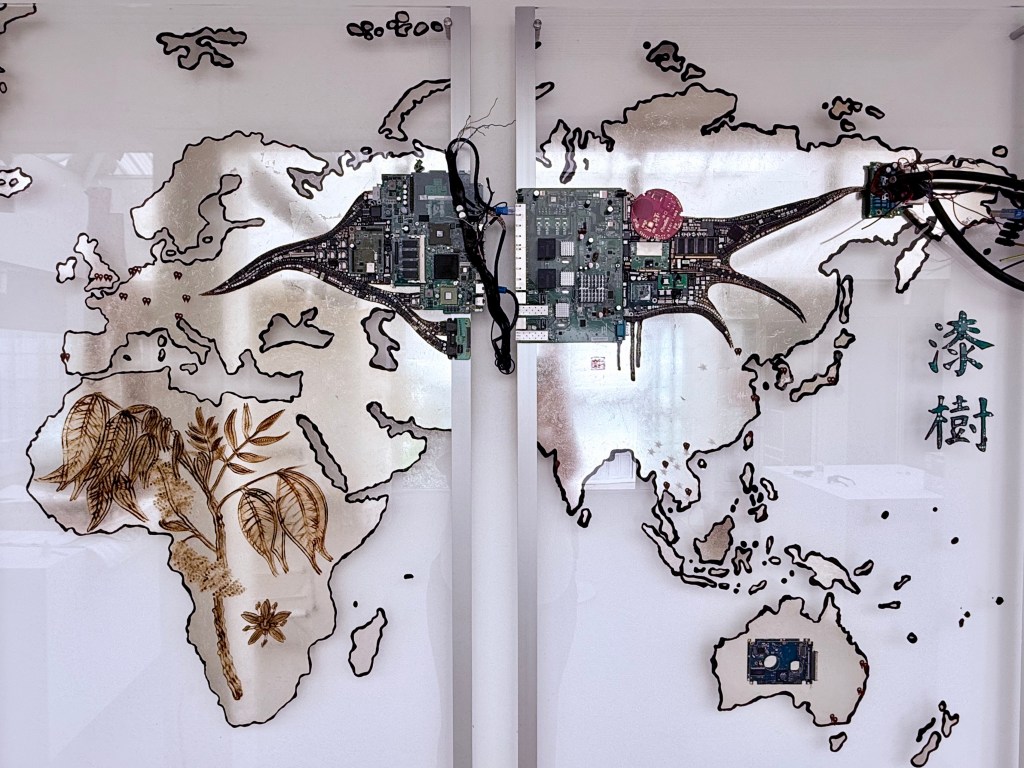
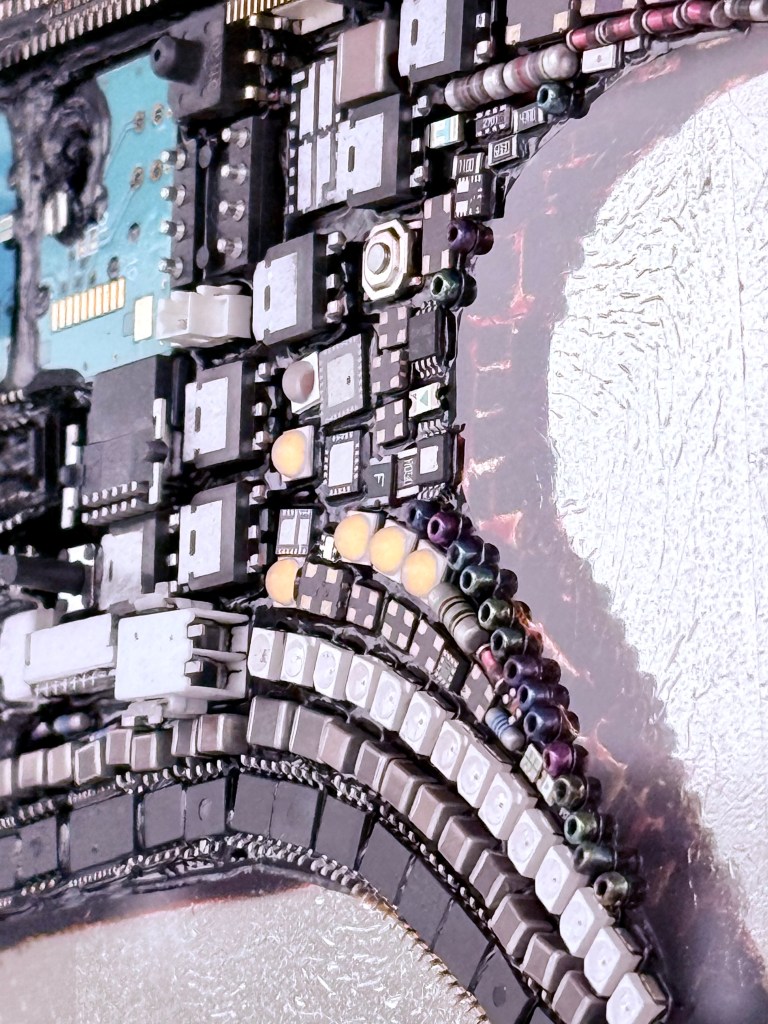
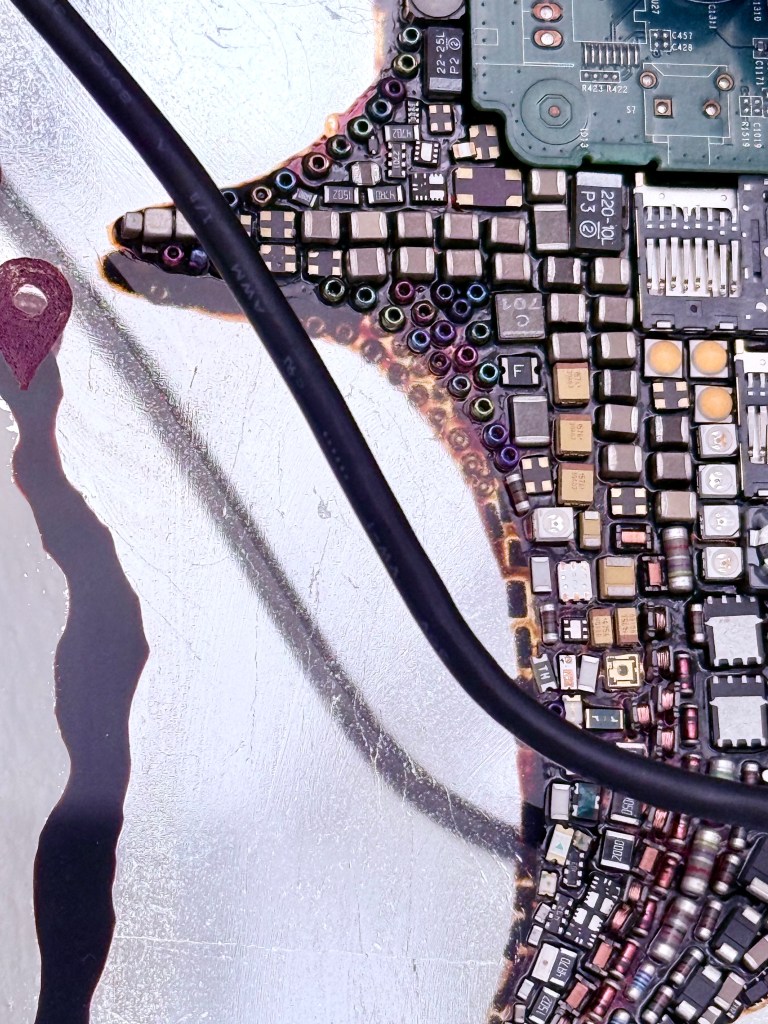
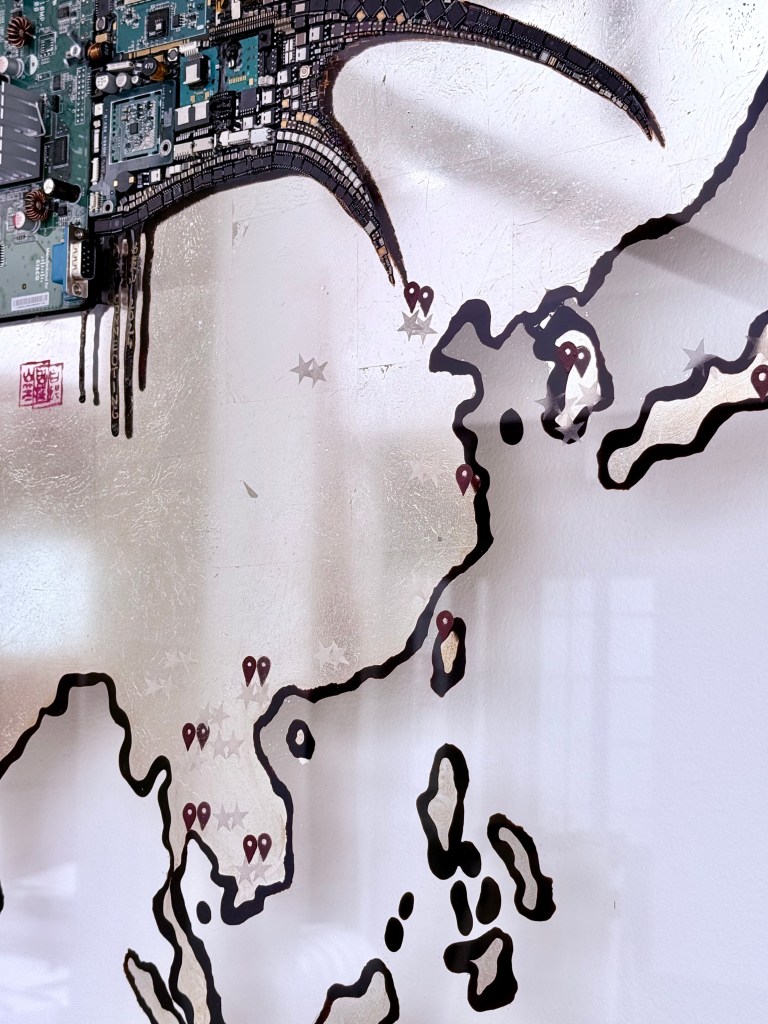
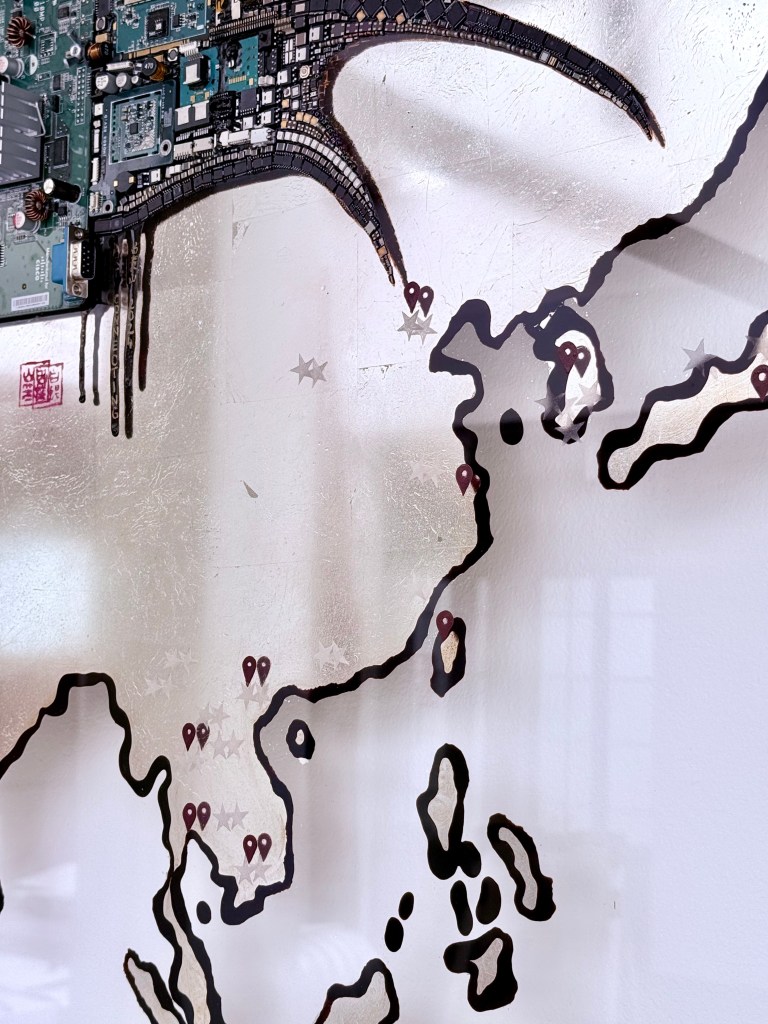
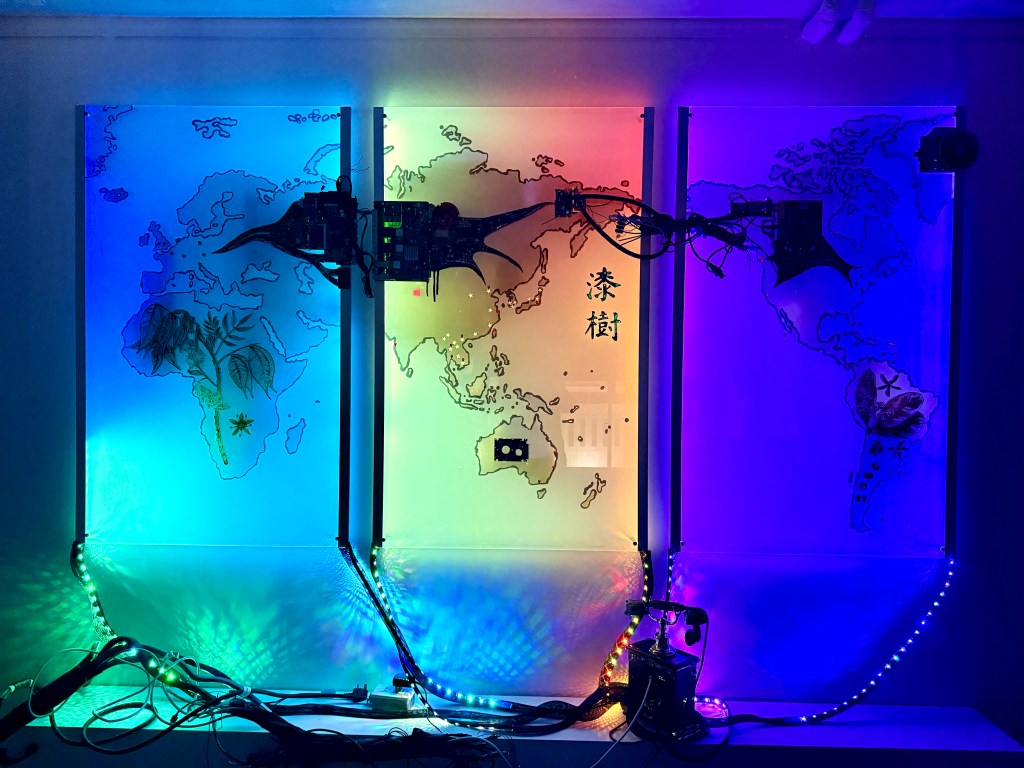
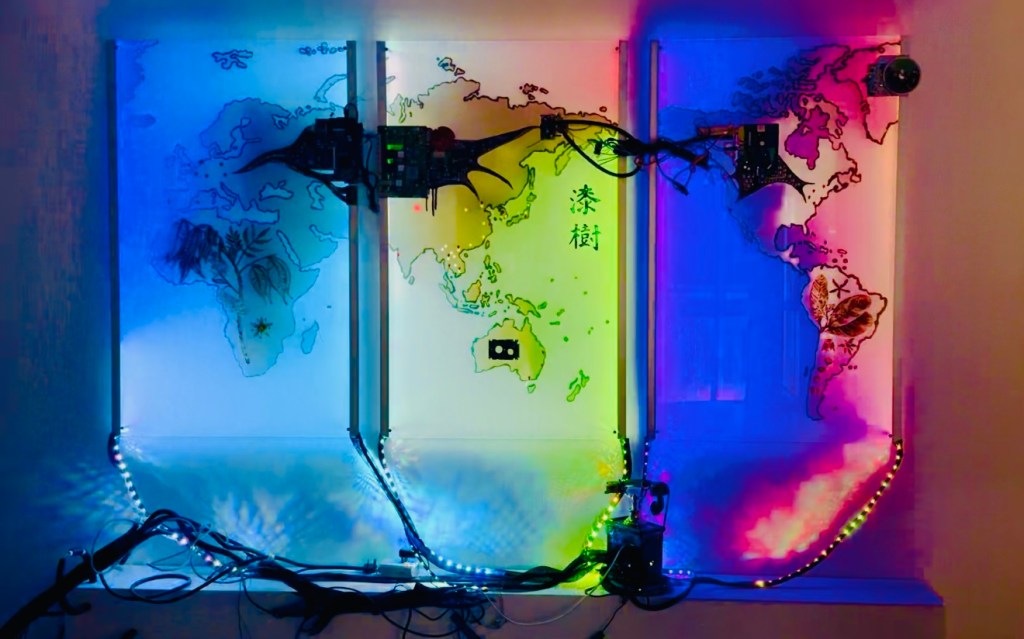
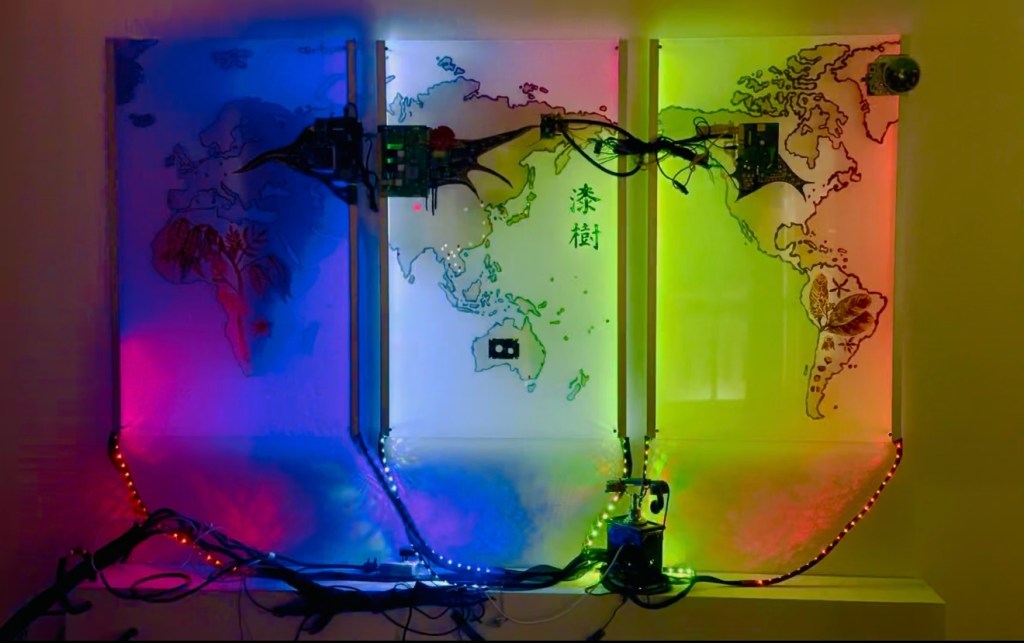
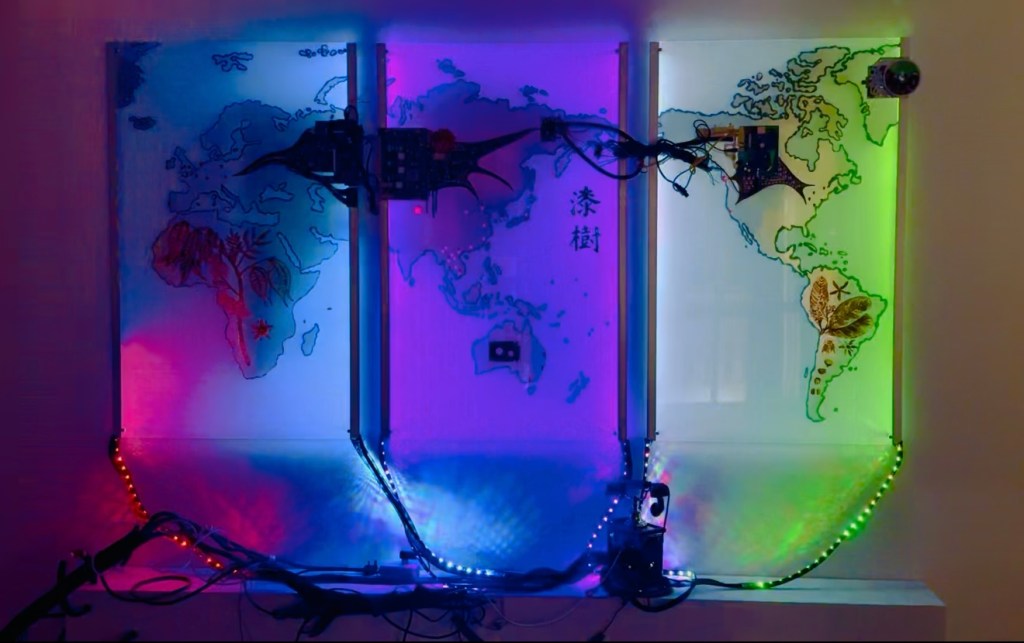
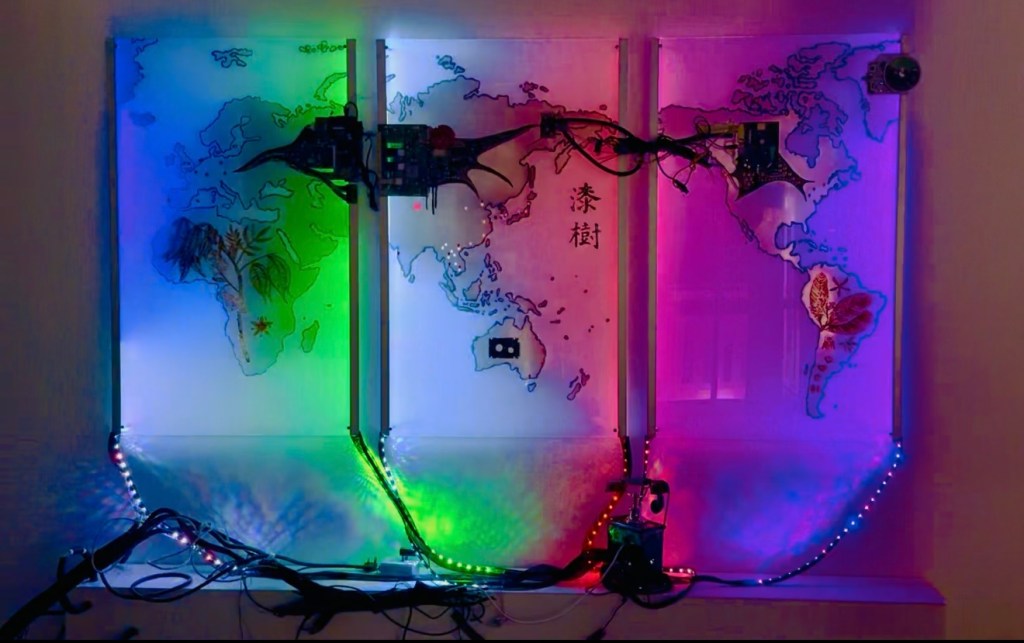
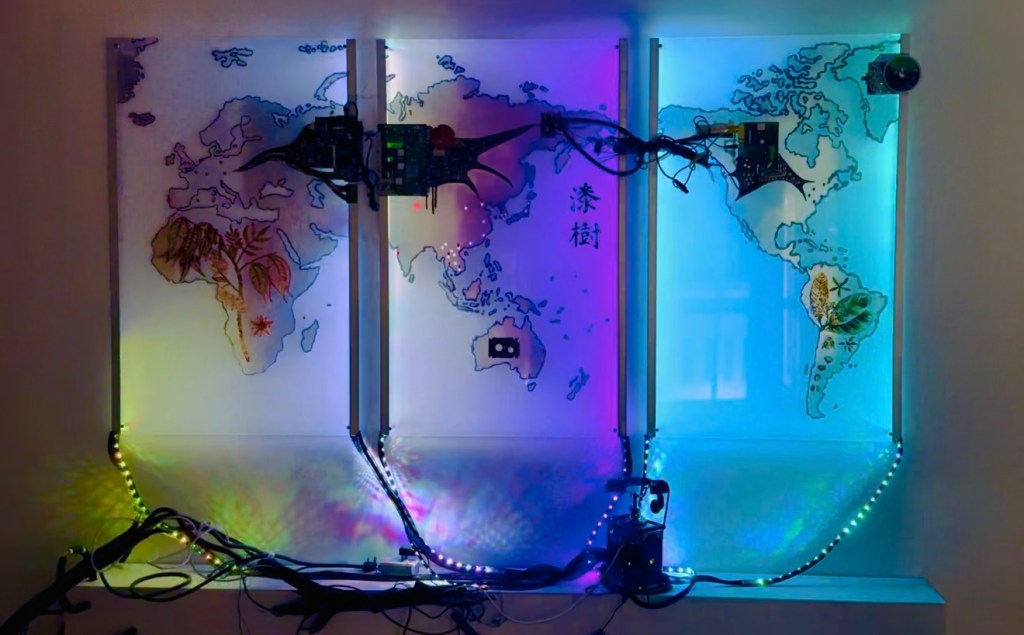
The installation consists of three interconnected panels made from light-diffusing acrylic glass. These panels, each measuring 130 cm by 80 cm, are coated with silver and champagne gold leaf inside the continents and painted with Thai tree lacquer (Rak) sourced from the Omkoi region in northern Thailand. On their surfaces, small, discarded computer parts—sourced from the Electronics Manufacturing Company Bluechips in Chiang Mai and dismantled components from an old Cisco router and MacBook—are embedded within the lacquer. These elements symbolize the intersection of craftsmanship and technological waste, transforming discarded materials into a commentary on interconnectedness.
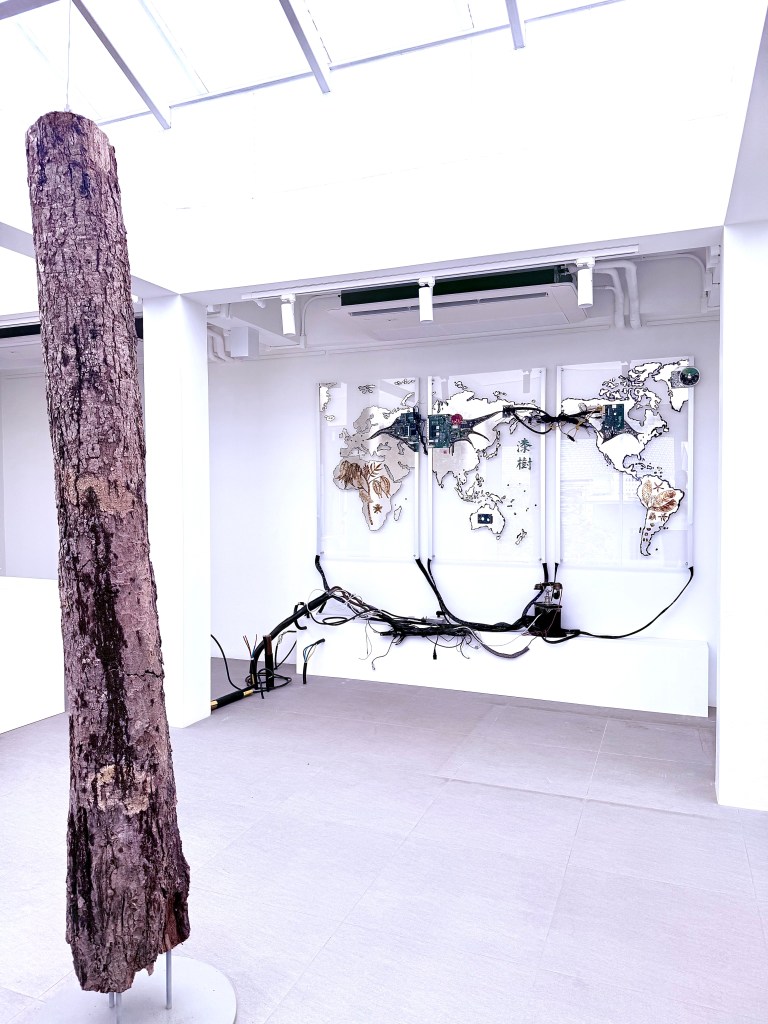
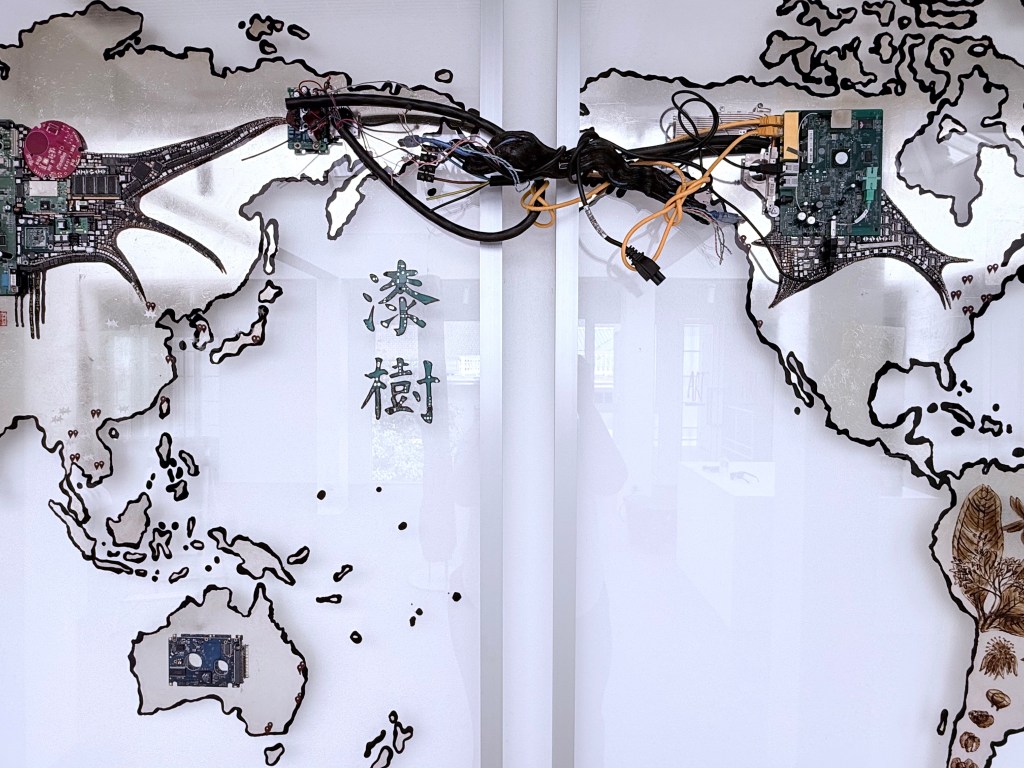
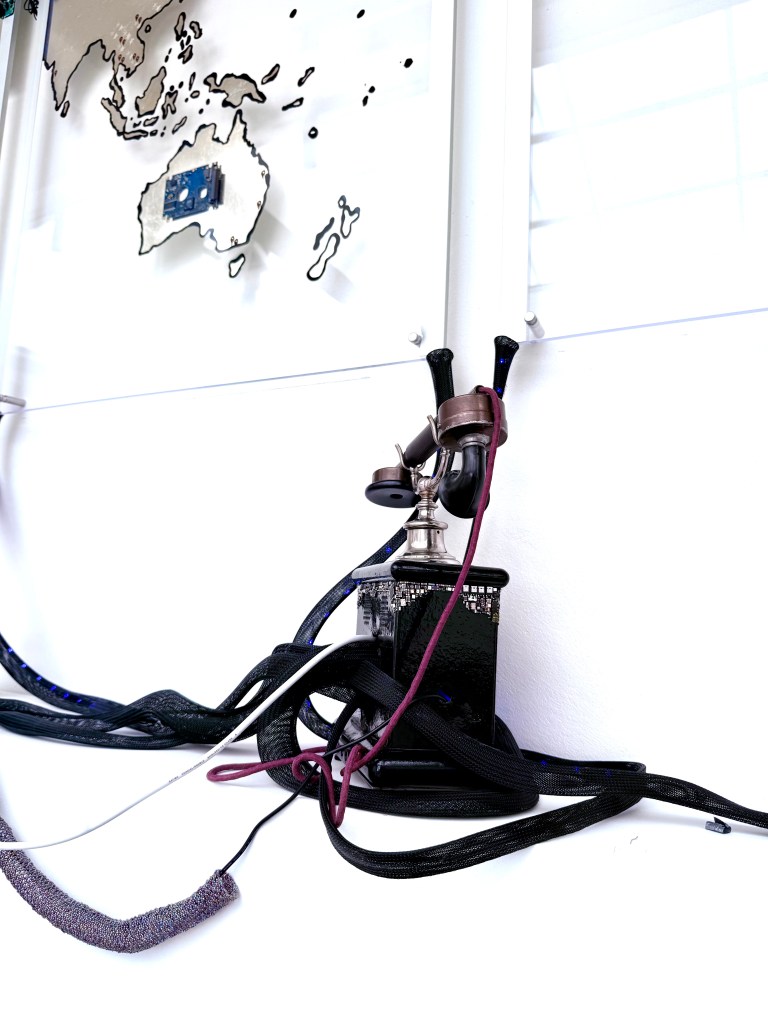
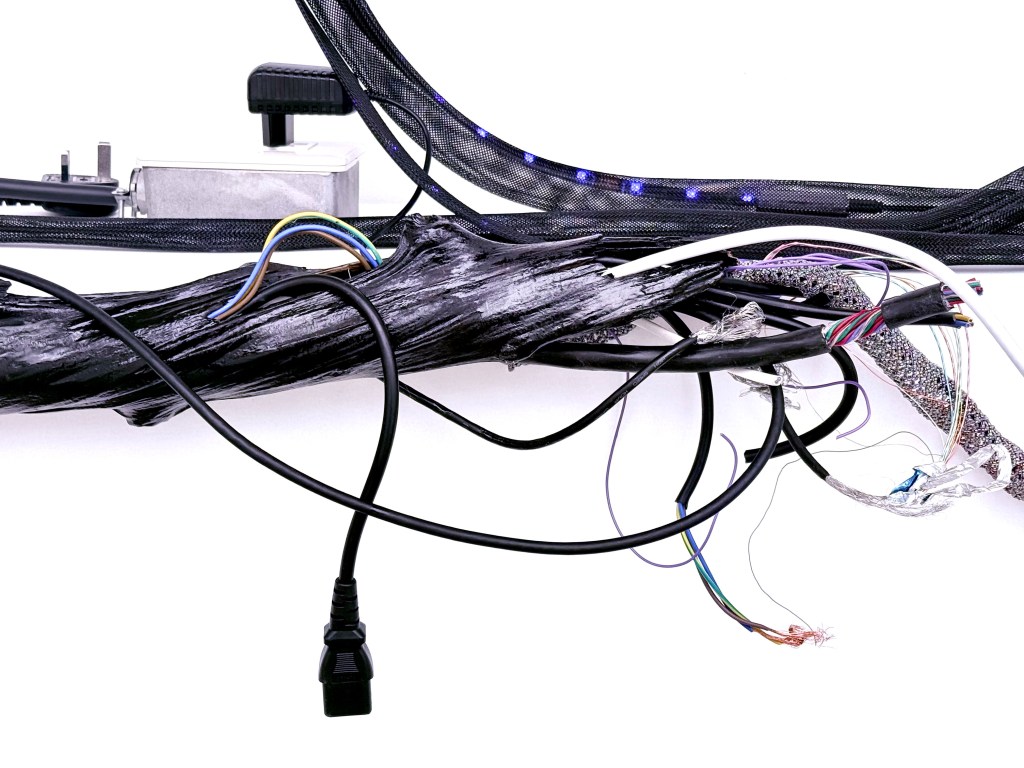
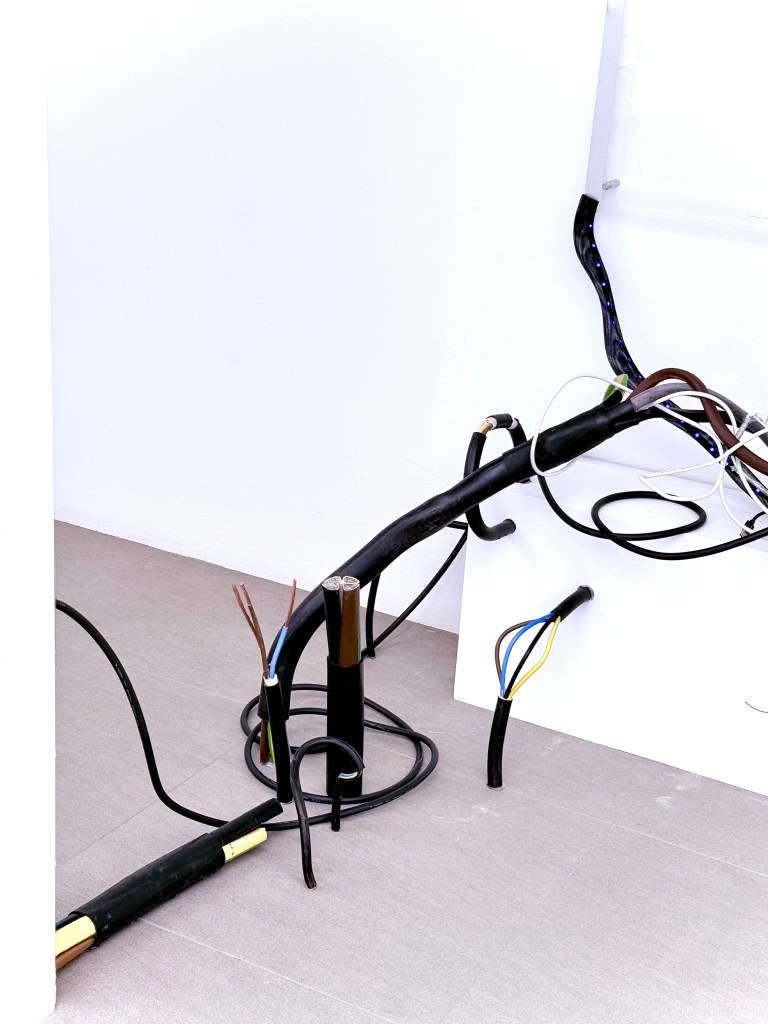
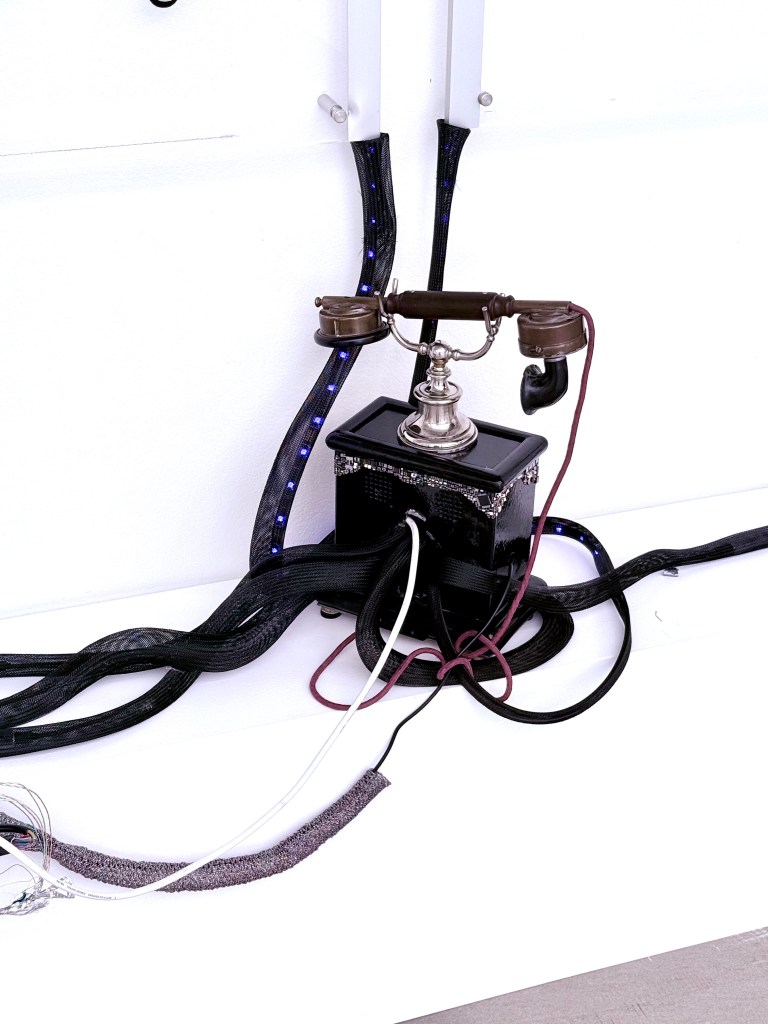
Various cables run through the installation, including telephone wires, high-power current cables, and other industrial materials. These cables connect to an antique telephone casing from the early 20th century, which houses the LED control system. This fusion of old and new technologies underscores the theme of evolving communication and its impact on cultural networks.
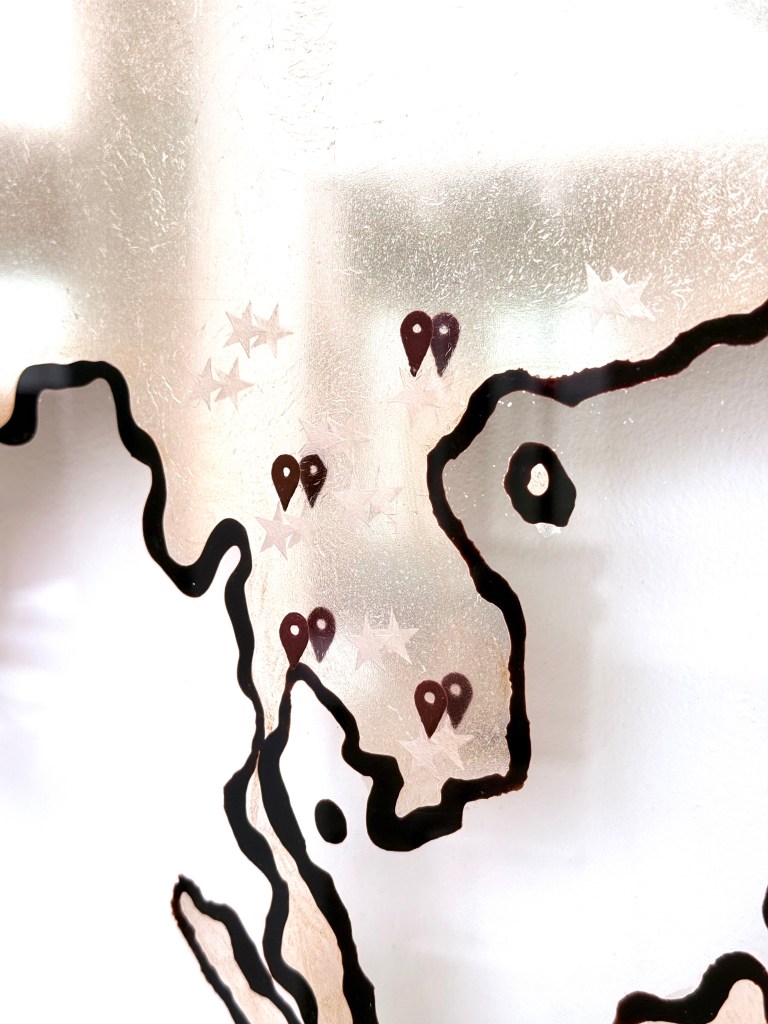
Engraved stars further adorn the panels, symbolizing historical lacquer hotspots, while lacquered pins highlight museums housing significant lacquer collections. A linked Google MyMap enhances the installation’s digital interactivity, displaying publicly accessible knowledge about lacquer traditions and artifacts. However, it also underscores the gaps in this information—a metaphor for the filtered and fragmented flow of knowledge in the digital age.
The continents themselves tell layered stories. Africa, for instance, is adorned with botanical illustrations of Toxicodendron succedaneum, a lacquer tree native to Asia, symbolizing the untapped potential of regions like Africa in global lacquer traditions. South America features Gluta usitata, bridging ecological and cultural connections across continents. These elements highlight the interwoven narratives of ecology, tradition, and human agency.
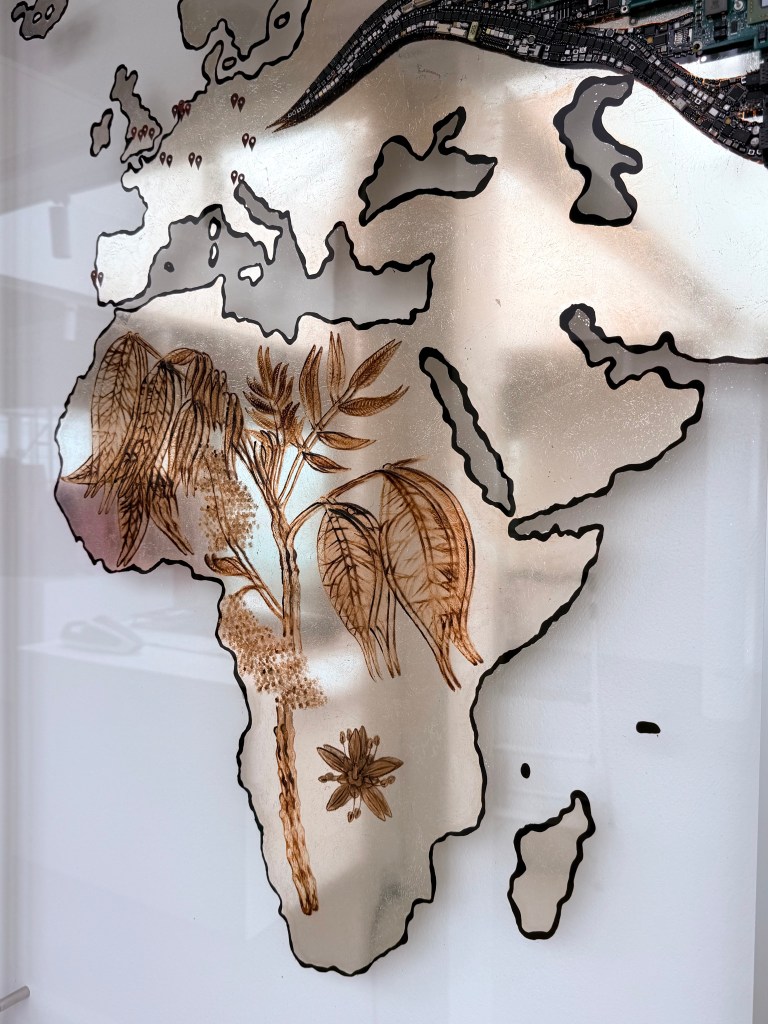
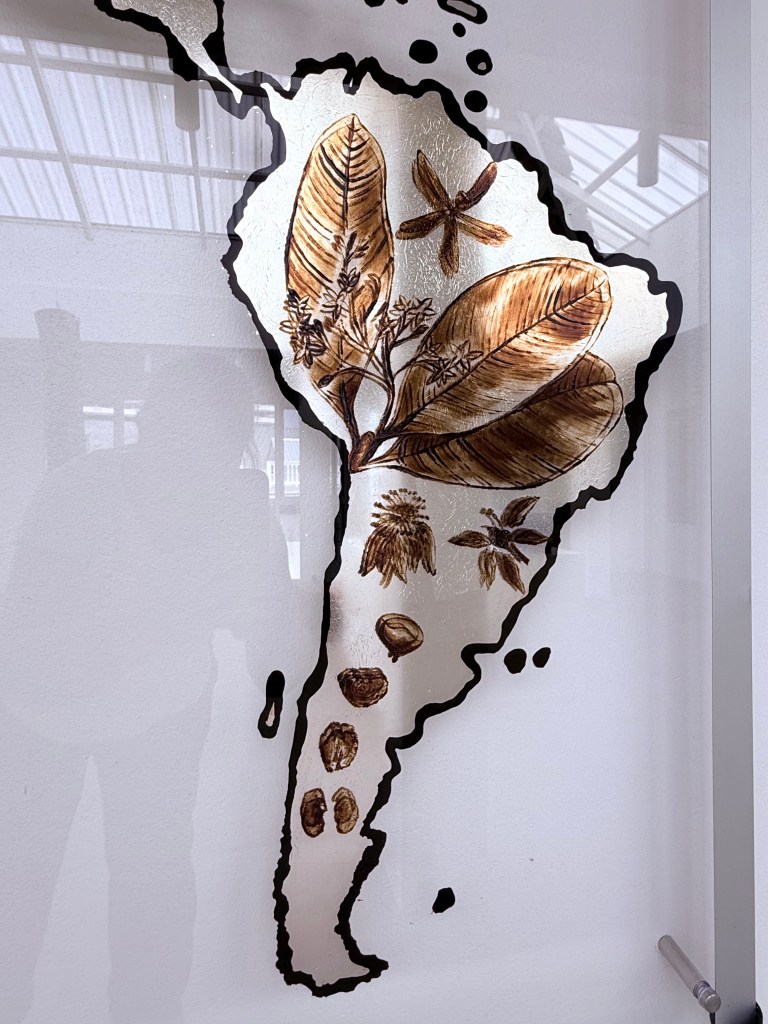
The continents themselves tell layered stories. Africa, for instance, is adorned with botanical illustrations of Toxicodendron succedaneum, a lacquer tree native to Asia, symbolizing the untapped potential of regions like Africa in global lacquer traditions. South America features Gluta usitata, bridging ecological and cultural connections across continents. These elements highlight the interwoven narratives of ecology, tradition, and human agency.
A Dynamic Interaction of Light and Sound
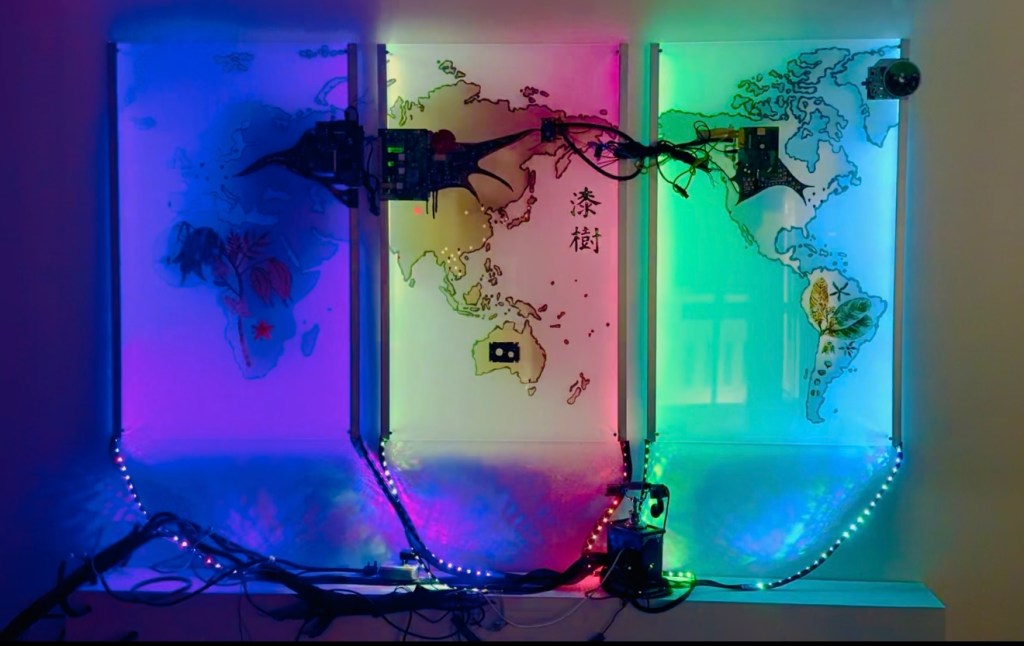
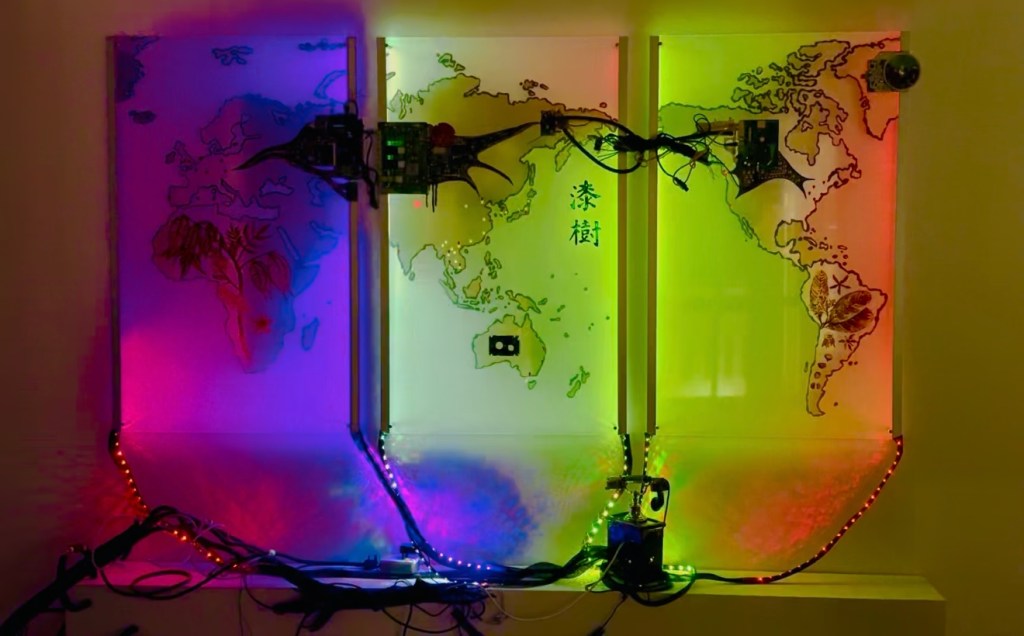
The LED lighting system along the edges of the panels transforms the installation into a living artwork. At night (see the first image), the panels come alive with a mesmerizing spectrum of colors, representing the flow of information, history, and ecology across the globe. The colors are not static; they respond to sound. As people gather to talk about lacquer, art, or even engage in casual conversations, the noise triggers dynamic color changes. This interaction rewards dialogue and curiosity with a colorful show, turning the artwork into a shared, participatory experience. The interplay of light and sound reflects the vibrancy of cultural exchange and the evolving narratives of human connection.
Technological and Natural Interconnectedness
Cables, both functional and symbolic, snake across the installation like roots or arteries, emphasizing the interconnectedness of natural and technological systems. Some cables are severed or reconnected, symbolizing the fragility and resilience of these networks. The cables converge into black tubes housed within an antique telephone casing, merging past and present modes of communication. This juxtaposition reflects how technological advancements are built upon historical foundations, while also reminding us of the complexities and vulnerabilities of global networks.
Nature and Technology in Dialogue
On the third floor of the Museum for Art Connecting in Chiang Mai, my installation stands in dialogue with its surroundings. While nearby tree trunks from old, tapped lacquer trees provide context for the museum’s scientific focus, my artwork emphasizes the technological and cultural dimensions of lacquer. The polished acrylic panels and glowing, sound-reactive LEDs create a striking contrast, highlighting the potential for ancient materials to find new life in contemporary art. This interplay invites viewers to reflect on how tradition and innovation coexist, shaping our understanding of sustainability and creativity.
Invitation to Reflect
This installation is more than a visual experience; it is an invitation to engage. It asks viewers to consider the intricate threads that connect us—geographically, historically, and technologically. The artwork underscores the ecological importance of tree lacquer and its cultural dissemination, urging a reflection on sustainability, heritage, and the evolving role of technology in shaping our understanding of the world.
As the lights pulsate and the colors shift in response to conversations, Lacquer and the World transforms into a dynamic, interactive space. It reminds us that dialogue—whether about art, history, or sustainability—is at the heart of understanding and connection in today’s world.
 白提山 creative_space
You must be logged in to post a comment.